

Advanced Post-Installed Rebar Design Software
RAMSET ANCHORING is a dedicated web-based engineering platform developed for the design and verification of post-installed reinforcement.
It is the next-generation replacement for the post-installed rebar calculation function previously available in SPIT i-EXPERT, providing a more specialized calculation environment for engineers working with existing and new reinforced concrete structures.
Visit ramsetanchoring.com
Three Dedicated Calculation Modules
RAMSET ANCHORING includes three dedicated modules for common post-installed rebar design scenarios.
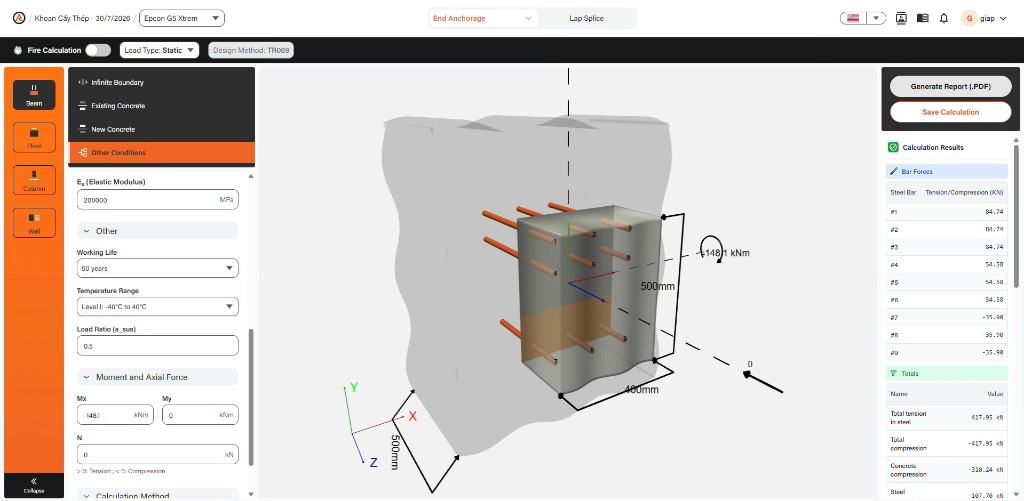
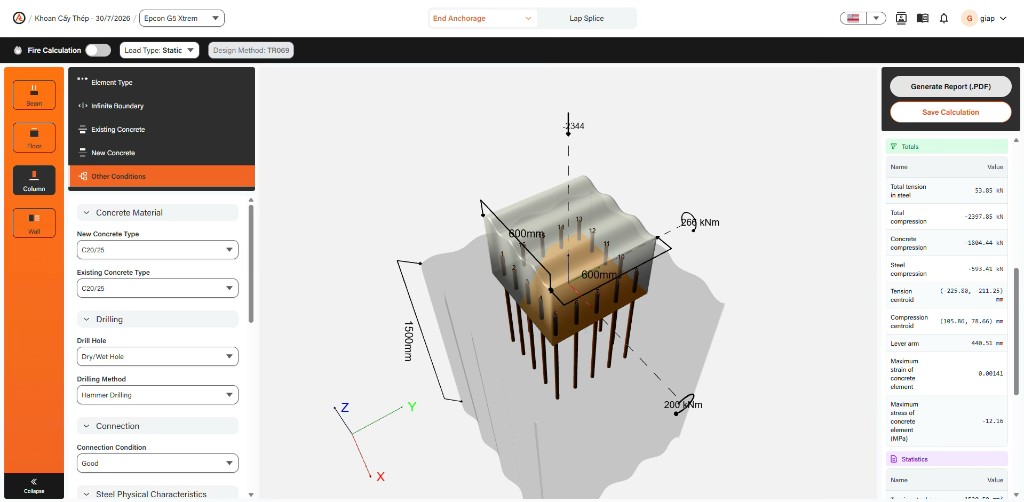
End Anchorage – Post-Installed Rebar
The End Anchorage module is designed for post-installed rebars used as starter bars or reinforcement extensions. It calculates the required anchorage/drilling depth and evaluates the forces developed in the reinforcement.
The module uses the TR069 design methodology together with relevant European standards and applicable ETA requirements for the RAMSET G5 Xtrem product.
Lap Splice – Post-Installed Rebar
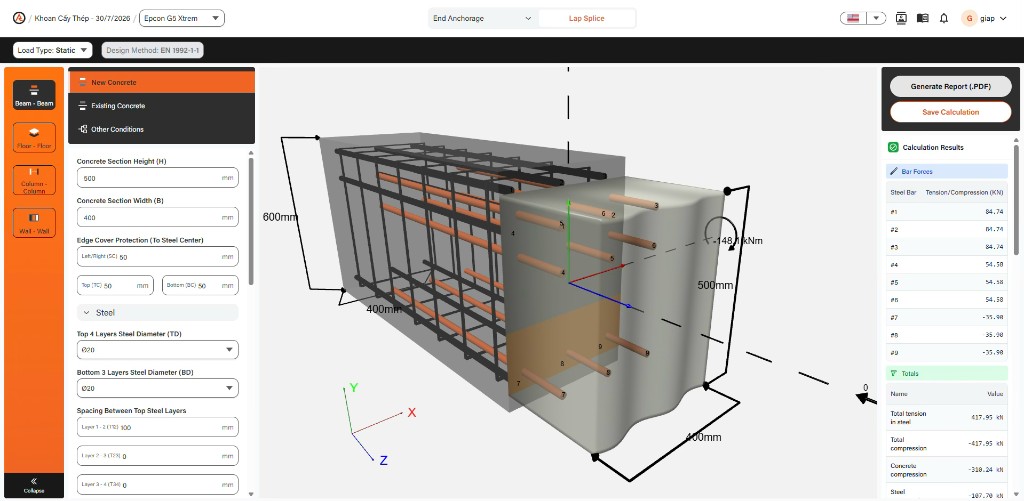
The Lap Splice module is designed for connections between existing and new reinforced concrete members using post-installed reinforcement.
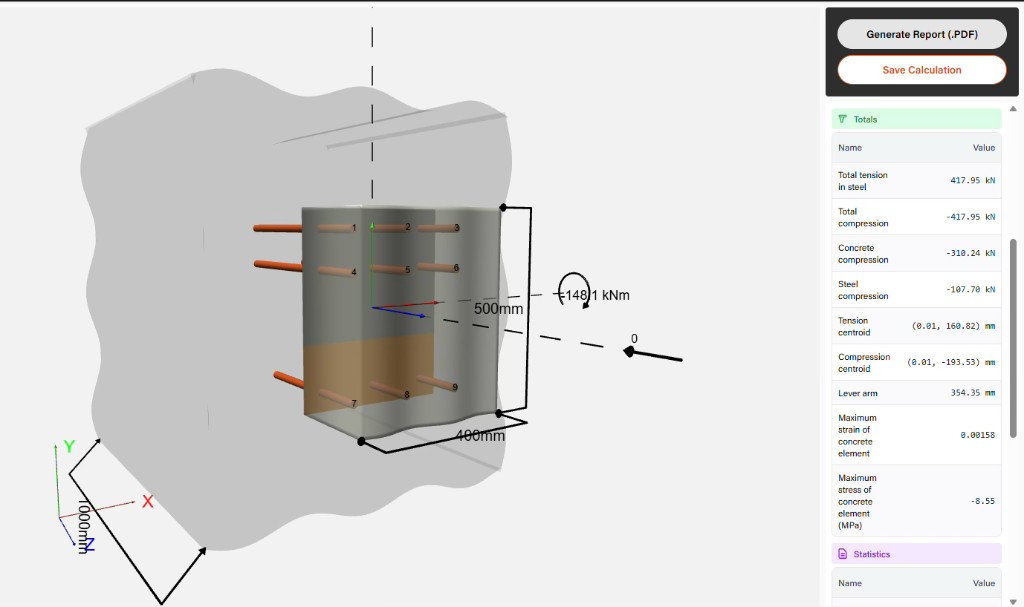
It allows engineers to define the concrete geometry, reinforcement arrangement and applied loads, and then evaluate the resulting forces in individual reinforcement bars and the behaviour of the reinforced concrete section.
In-Situ Testing – Single Rebar
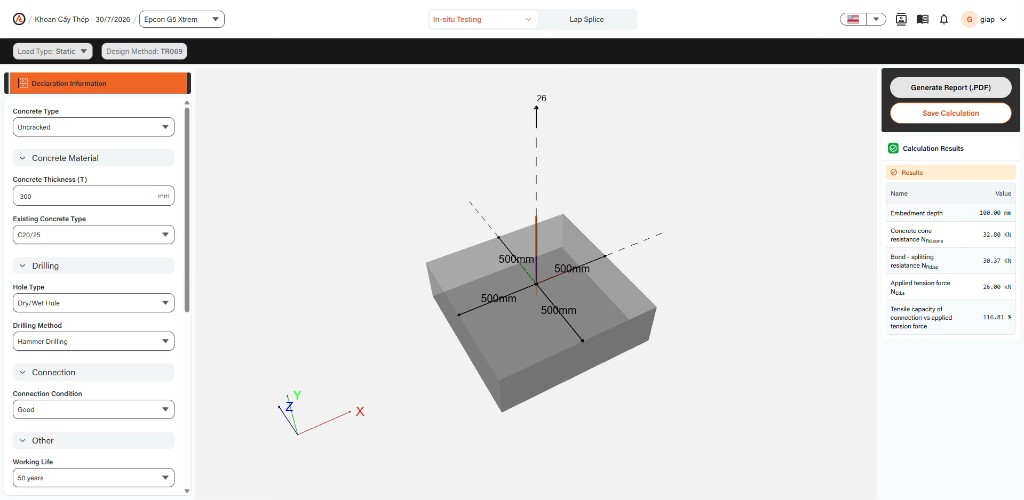
The In-Situ Testing module provides calculation support for single post-installed rebar field testing.
Engineers can define the rebar diameter, embedment depth, concrete conditions, edge distances and applied tensile load. The calculation evaluates relevant resistance mechanisms, including concrete cone resistance and bond–splitting resistance, and compares the calculated tensile capacity with the applied load.
Nonlinear Reinforced Concrete Section Analysis
A key feature of RAMSET ANCHORING is its ability to analyse the reinforced concrete section, rather than treating the post-installed rebar as an isolated anchorage.
The platform uses a FEM-based nonlinear analysis methodology for reinforced concrete sections. The concrete material model uses the Parabola-Rectangle Stress Block according to EN 1992-1-1 (Eurocode 2).
The software can analyse common reinforced concrete sections including:
- Beams
- Slabs
- Walls
- Circular columns
- Rectangular columns
- T-shaped columns
- Cross-shaped columns
The calculation results provide detailed information such as individual rebar forces, tension and compression forces, reinforcement areas, concrete strain and stress, force centroids and lever arms.
This allows engineers to understand not only the anchorage capacity of the post-installed reinforcement, but also how the reinforcement interacts with the existing reinforced concrete section.
Designed for European Engineering Standards
RAMSET ANCHORING incorporates calculation methods based on:
- EN 1992-1-1 – Eurocode 2
- EN 1992-4
- TR069
- Relevant ETA requirements for the applicable RAMSET G5 Xtrem product
Access the Platform Online
The platform is delivered as a SaaS web application, requiring no traditional software installation. Engineers can model the structure in 3D, review calculation results and generate PDF calculation reports directly from the platform.
Explore ramsetanchoring.com
Need Help or a Specific Technical Survey?
The Technical Team at Your Service
You can contact the technical team:
- By phone at +65 6746 1177, available Monday to Friday 9:00 am to 7:00 pm.
- By mail by filling out the contact form and describing your request. We will respond as soon as possible.